What Everyone Gets Wrong About Mortgage Pre-Approvals

by elevated & co. realty RE/MAX Escarpment

First-Time Buyer: How Much Can I Really Afford in Ontario?

In Ontario, we work with dozens of first-time buyers each year in Hamilton, Burlington, Oakville, and across the GTA. The conversation always starts the same way: "How much can I really afford?" And we always start with the honest answer: the bank will approve you for more than you should probably spend.

What the Bank Says You Can Afford

Here's the formula lenders use. Your mortgage payment, property taxes, utilities, and heating shouldn't exceed 39% of your gross household income. This is called the Gross Debt Service (GDS) ratio, and it's the primary tool lenders use to calculate maximum approval.

Let's put numbers on it. If you and your partner earn $100,000 combined per year, that's roughly $8,333 per month gross. The bank says you can spend 39% of that on housing: $3,250 per month. At current Ontario rates (roughly 4.5% to 5%), that might qualify you for a mortgage around $575,000 to $625,000, depending on your down payment. In some parts of the GTA, that gets you a solid home. In Oakville or core Toronto, it's tighter.

But here's the trap: just because the lender approves you doesn't mean the math works for your actual life. Lenders use averages. They assume property taxes of a certain amount. They assume utilities will cost a certain amount. They assume your income is stable and your job is permanent. They don't account for your specific reality.

Note: The lender's approval is based on your entire financial picture—income, credit, debts, down payment. A higher down payment doesn't increase your approval if your income-to-debt ratio is already stretched.

Most first-time buyers don't realize this until they've closed and they're living the payment. Month one feels okay. Month three, when the insurance bill hits or your car needs work, it's uncomfortable. By month six, you're checking your account daily and wondering if you made a mistake.

That's not smart borrowing. Smart borrowing means starting with the lender's number and then subtracting.

The Real Affordability Number: Start From Your Monthly Budget

Instead of starting with "What will the bank lend me?" start with "What can I genuinely afford each month without stress?"

This requires honesty. Sit down and list out everything you spend monthly: food, transportation, phone, internet, insurance, subscriptions, childcare, activities, dining out, car maintenance, gifts, entertainment. Don't lowball these. Use real numbers from your bank and credit card statements. The average Ontario household spends $4,000 to $5,000 monthly on everything except housing. Some spend less, some significantly more.

Now add in property taxes (research the specific neighbourhood in Hamilton, Burlington, or Oakville), utilities (call the utility company for average costs), home insurance (get a quote), and property maintenance (roughly 1% of the home's value annually, or $150 to $200 per month on a $400,000 home).

Add it all together. That's your non-mortgage monthly cost. Subtract it from your monthly take-home income. What's left is what you actually have available for a mortgage payment.

Reality check: Many first-time buyers discover that their affordable mortgage payment is $1,500 to $2,000 monthly, not the $3,000 to $3,500 the bank approved them for. That's a $200,000 to $300,000 difference in purchase price. It's disappointing, but it's the difference between comfortable and stressed.

Here's an example. A couple earns $100,000 combined. Their take-home after taxes is roughly $6,500 per month. They spend $4,200 monthly on food, transportation, phone, insurance, and everything else. They have $2,300 left. Property taxes on a $500,000 home in the GTA are roughly $250 to $350 monthly. Utilities and heating are $150. Home insurance is $120. Maintenance reserve is $150. That's $670 before the mortgage payment. They have $1,630 left for the mortgage. At 4.5%, that supports a mortgage around $360,000. They could theoretically go higher—their income says they can. But would they sleep at night? Probably not.

The bank might approve them for $575,000. But their real number is closer to $400,000, because going higher leaves no cushion for emergencies, rate changes, or life events.

The Lifestyle Cost of Over-Borrowing

This is the piece financial calculators miss. They show you the math. They don't show you the reality of what it feels like to be maxed out.

When you borrow too much, every decision becomes financial. Can we go on vacation? Only if we skip a month of home maintenance savings. Can we help our kids with school costs? Only if we pause retirement contributions. Can my partner take parental leave? Only if we tighten the belt everywhere else. The home you bought to enjoy becomes a source of constant low-level stress.

We've had buyers close on homes at the top of their approval and call us within six months stressed and asking if they can sell. That's not a good outcome. The home is fine. The neighbourhood is great. The problem is the payment doesn't leave room for anything else.

The single biggest factor in being happy in your first home is having breathing room in your budget.

Over-borrowing also makes you vulnerable. If rates rise (and they will, eventually), your payment rises. If your income drops even temporarily, you're in trouble. If something breaks in the house—furnace, roof, foundation—you have no savings to fix it. You're suddenly looking at a $10,000 problem and a $200 monthly payment with nowhere to go. That's when people panic and make bad decisions.

Note: At closing, you should have at least a 3- to 6-month emergency fund set aside. If you've spent every dollar on down payment and closing costs, you're vulnerable. First-time buyers often deplete savings to maximize down payment, which is a mistake.

In the Hamilton and Burlington markets, where homes are more affordable than Oakville or core Toronto, you actually have room to be more conservative. If you can afford $450,000 but could stretch to $500,000, staying at $450,000 in Hamilton gives you cushion. That cushion is worth more than the extra square footage.

Account for Rate Changes

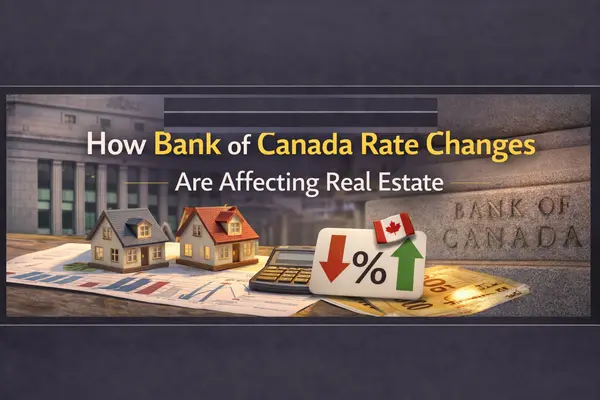
Your pre-approval is at today's rates. Today, that might be 4.5% or 5%. By the time you close, rates could shift. And more importantly, when you renew your mortgage in five years, rates will absolutely shift.

If you can barely afford your payment at today's rate, you cannot afford the home. It's that simple. Most Ontarians renew mortgages every five years. If rates jump to 6% or 7%, your payment will rise. If you're already stretched, that's catastrophic.

Here's what we recommend: use a stress test. Calculate your payment at 6% or 6.5%, even if today's rate is 4.5%. If you can't comfortably afford the payment at 6.5%, you're over-extended. The bank will do a stress test to approve you, but it's not as conservative as it should be.

Using our earlier example: a couple approved at 4.5% for a $575,000 mortgage might face a $3,200 monthly payment. At 6.5%, the same mortgage is $3,650 monthly. Can they afford an extra $450 monthly in five years? If not, they shouldn't borrow $575,000. They should borrow less.

This sounds extreme, but it's not. Rates have been low. They won't stay low. When they rise—and history says they will—your payment will be higher. You need to be okay with that.

First-Time Buyer Programs and Down Payment Help

Ontario offers some support for first-time buyers, and it's worth understanding.

The Registered Home Ownership Savings Plan (FHSA) allows first-time buyers to contribute up to $8,000 per year to a registered savings account and deduct it from their taxes. The funds grow tax-free and can be withdrawn tax-free for a first home purchase. If you have five years before buying, you could accumulate $40,000 plus growth. That's real down payment help.

Some lenders offer first-time buyer programs with slightly better rates or lower insurance costs. These are worth asking about, though rates are competitive enough that the difference isn't dramatic.

Note: If you're a first-time buyer, the federal First-Time Home Buyers' Incentive lets you borrow up to 5% of the purchase price interest-free from the government. On a $400,000 home, that's $20,000 in government-backed funding. You repay it when you sell or after 15 years. It reduces the down payment you need from your own savings.

The more real support is having someone (parents, grandparents) help with down payment. We see this regularly. If your parents can gift $20,000 toward your down payment, that changes your math significantly. You're borrowing less and paying less interest over time.

But don't go into a first home transaction counting on help that hasn't been committed. Plan for what you can absolutely do yourself.

The Checklist Before You Start Shopping

Before you start looking at homes in Ontario, make sure you've answered these questions:

Have you calculated your true monthly budget? Not the bank's formula—your actual expenses. Write it down.

Do you have 5% down saved, plus $15,000 to $20,000 for closing costs? Closing costs include legal fees, inspection, appraisal, title insurance, and land transfer tax. Most first-time buyers underestimate these.

Have you saved a 3- to 6-month emergency fund separate from down payment? This is crucial. If the furnace breaks in month three, you need to fix it without panic.

Can you afford your mortgage payment at 6% or 6.5%, not just today's rate? If not, you're borrowing too much.

Are you planning to stay at least five years? Closing costs mean you need time for appreciation to offset the expense.

Do you understand the difference between pre-approval and final approval? We covered this earlier, but it matters. [INTERNAL LINK: mortgage pre-approval guide]

If you can answer all of these honestly, you're ready to start shopping. You know your real number, not the bank's number.

FAQ

Q: What if I get pre-approved for $500,000 but I think $350,000 is what I'm comfortable with?

That's exactly right. Your comfort matters more than the lender's approval. Go with your number. The lender is protecting themselves; you're protecting your life. These aren't the same thing.

Q: Should I get pre-approved for my maximum in case I find something above my comfort level?

No. Pre-approval in your comfort range gives you clarity when shopping. If you get pre-approved for your maximum, you'll be tempted to spend it. Limit the temptation by getting approved for a realistic number.

Q: How much should I save for an emergency fund while saving for down payment?

Ideally, $15,000 to $20,000 in a separate emergency fund that you don't touch, plus your down payment and closing costs. We know this is hard. If you can only do one, prioritize closing costs. But true financial safety includes both. [INTERNAL LINK: first-time buyer savings plan]

Q: If rates are 4.5% today, why would I stress-test at 6.5%?

Because rates won't stay at 4.5% forever. When you renew your mortgage in five years, rates will be higher or lower—we don't know which. But historically, 6% is not unusual. You need to be able to handle it.

Q: Is it smarter to buy a smaller home I can comfortably afford or stretch for more space?

Buy the smaller home. More space doesn't matter if you're anxious about the payment. A home you own comfortably beats a home that owns you. You can always upgrade later if your income increases.

The conversation about affordability isn't really about numbers. It's about reality. The bank will approve you for more than you should spend, because they're protecting their interest, not your quality of life. Your job is to figure out what actually works—not what's theoretically possible.

If you're working through this in the GTA, Hamilton, Burlington, or Oakville, let's talk. We help first-time buyers cut through the noise and figure out their real affordability number. It's honest work, and it prevents the regret that comes with over-borrowing.

About the author: This article was written by Deanna Mendes at elevated & co. realty, serving buyers and sellers across Hamilton, Burlington, Oakville, and the Greater Toronto Area.

elevated & co. realty RE/MAX Escarpment

Let’s Elevate Your Move

Moving isn’t just a transaction — it’s a strategic life decision.

At elevated & co. realty, we combine market expertise, next-level negotiation, and a refined client experience to ensure every detail is handled with precision.

If you’re thinking about making a move, let’s build the right plan — together.

+1(905) 971-6777

hello@elevatedandco.ca

500 Brant St, Burlington, ON, L7R 2G4, CAN

Contat Us

Name
Phone
Message